
Last month we discussed a few things you could do to keep your children safe when you sign them up for athletics.
This month, we delve a little deeper. The information provided here is from the International Olympic Committee. This research showed that about two-thirds of adolescents participate in a sport weekly, with nearly half engaging in sports more than one time per week. That’s a lot of children.
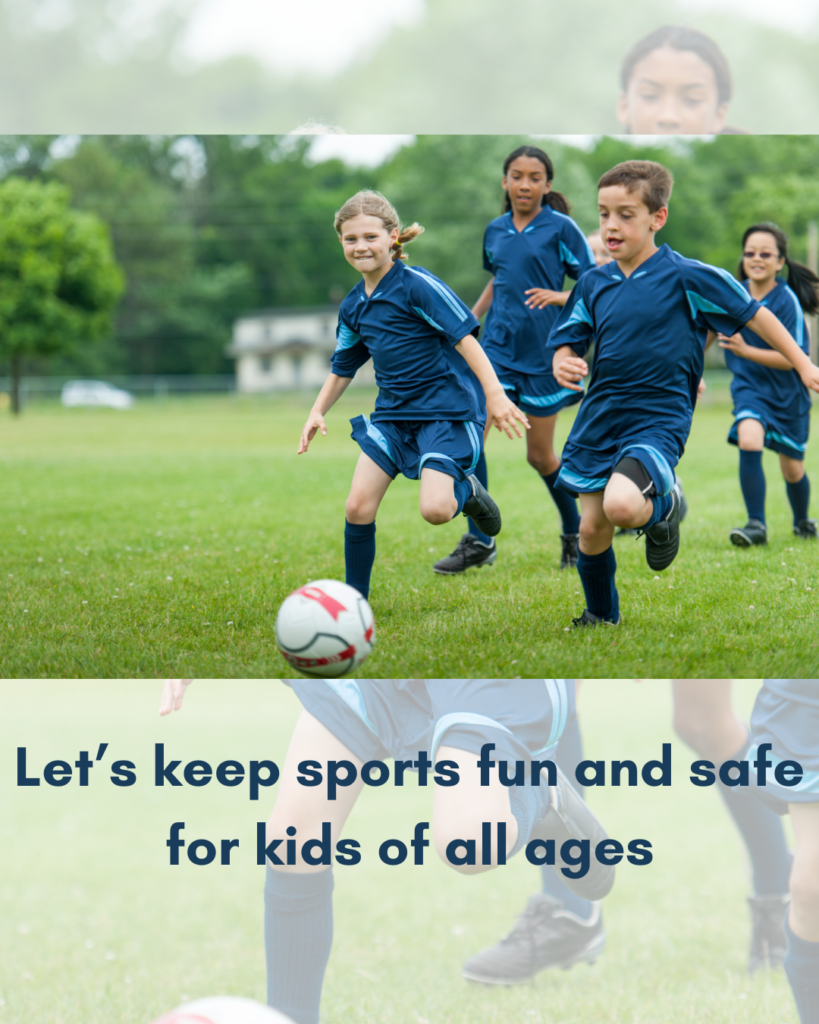
Most of the time, sports are safe places where children learn valuable skills about working together, relying on others, gain self confidence, and much more.
However, about 65% of athletes in this particular study reported they didn’t feel their best interests were always considered and many reported at least one experience of violence inside their sport. That could include physical, emotional, psychological, sexual, verbal, financial, neglect, hazing, bullying, harassment or discrimination.
Power imbalances
Abuse within sport often times occurs due to a power imbalance (much like abuse outside of sport). That means one person holding authority over another. This could be a coach or another athlete with some authority.
These power and control tactics used by those in positions of power could be some form of manipulation, coercion, threats, domination, minimizing, denying and blaming the victim.
The relationship between a coach and an athlete can almost feel familial – a father figure for example. It can put an athlete in a position where they feel they are not able to tell, where they rationalize the behaviors or second-guess themselves.
Some examples of the power imbalance cited by athletes were:
“I felt like I couldn’t say no…he was the one deciding if I’d make the next team.”
“He was older than my dad. We all looked at him as a father figure.”
“He was ‘the man’ – the best coach the region had ever seen.”
Grooming
The definition used in this study for grooming is “harmful behavior made to look like helpful behavior” and we think that description is spot on. It is the main tactic used by perpetrators especially to exploit the power imbalance described above.
Perpetrators test their target’s susceptibility, reliability and cooperation. Oftentimes, new members to a team are the target. Particular athletes with aspirational goals and drive can become targets as they can be more easily manipulated due to their desire to succeed.
 These perpetrators don’t just groom the athlete. They groom the parents, the organization and the community. They have to build up their social standing as a barrier to accusations.
Sadly, in sport, winning is everything. If a coach has a long-standing winning record, the community is less likely to believe they could ever hurt children.
Nuances in sport
Abuse of an athlete by a trusted adult (trusted by the athlete and their family) can have long-term consequences on the athlete’s health and their performance. A child’s athletic career is often heavily tied to traditions and competitive pressures that are accepted within the sport. This enables abuse to occur.
Because they don’t want to disappoint their team, their family and even the abuser, athletes often tolerate, rationalize or conceal their abusive experience. If they speak out, they could be blamed for damaging the team, the coach’s career and everyone’s future ‘opportunities’ on the team.
Shortcomings
Coaches and other leaders within sports often do not take the time or see the need for prevention education. This could be because they don’t think the problem exists, they don’t want to take the time, good, cost-effective training isn’t readily available, or they believe that type of education belongs elsewhere in the children’s lives – not in sport.
We can do better. We can provide free, timely prevention education at any level of sport and coaches should be open to that. The safety of the children in their care should be a coach’s number one priority. Safe, healthy kids make better teammates and leaders. Every coach should want that kind of player on their team.
When a child discloses abuse, there is no convenient time to respond. A forensic interview may be needed immediately. A caregiver may need support and guidance. A child may need counseling to begin the healing process.
For more than three decades, we have been here to provide those services – at no cost to the children and families who need them.
That commitment has never changed.
 What has changed is the funding environment surrounding nonprofit organizations and children’s services. Like many organizations, we are navigating a year in which traditional funding sources are increasingly competitive, some have been drastically cut or become less certain.
For many years, our agency, and many others throughout Missouri, have relied on funds from the Victims of Crime Act (VOCA). At one point, it was our largest funder. That has changed. In 2026, we have experienced two reductions in VOCA funding which has created an unexpected gap in our budget.
But while funding changes, the needs of children do not.
That is why community support is so important.
Grants can launch programs. Public funding can support essential services. But individual donors provide something equally important: the flexibility and stability that help ensure we can continue responding when children and families need us most.
It’s individual supporters like you that help sustain the work that often happens quietly, behind closed doors and out of public view:
- A child having a safe place to tell their story
- A family receiving support during an overwhelming and uncertain time
- A child accessing therapy and beginning to heal from trauma
- Professionals working together to improve the response to child abuse
- Prevention and education efforts that help make our community safer for children
This work is not possible without people who believe that protecting children and supporting families is a shared community responsibility.
So, as we move into the fall months, we invite you to make a gift to help ensure that our services remain strong, accessible and available – regardless of changes in the funding landscape.
In last month’s issue of The Advocate, I brought you information about Buchanan County Kids – an initiative on the November ballot in Buchanan County to bring a Children’s Services Fund to our area. This is a 1/4 cent sales tax for the purpose of supporting mental health for children ages 0-19. Here is a link to that introduction article.
 Some have asked questions like “Will this actually make a difference?” or suggesting that ‘throwing money at the problem’ isn’t really the answer. To that, I say this is not an experiment or a new idea. This type of fund is working and showing real results in other Missouri counties.
Communities across Missouri have already used Children’s Services Funds to expand access to mental health care, strengthen families, support children in crisis and invest in prevention.
I will put a few links at the end of this article so you can look at what other counties are doing and decide for yourself if Buchanan County’s children deserve the same.
A Children’s Services Fund can create stability. Instead of agencies repeatedly trying to piece together children’s services through grants, donations and short-term funding, a local fund creates a predictable source of public investment.
It can address gaps that already exist. The purpose isn’t necessarily to replace existing funding. The idea is to use these funds to support services across multiple areas where community need exists.
It can support both prevention and intervention. The Missouri statute allows funds to support prevention, family interventions, mental health screenings, counseling, crisis services, treatment and other children’s services.
It can put decisions closer to the community. The funds would be locally administered, with boards responsible for determining how resources are invested within the statutory framework. Boone County, for example, now uses community assessments and other local input to establish its funding priorities. In other words, they have tailored it over time to suit the needs of the children in their own community.
It can be accountable. These aren’t just unrestricted dollars handed out without oversight. Existing funds use applications, contracts, reporting, audits, outcome measurement and strategic planning. Most funds publicly provide audits, board materials and community impact reports.
You can check out Boone County, Jackson County, St. Charles County, and Clay County funds at these links to see for yourself what’s going on around the State.
What I want you to hear is this: A Children’s Services Fund is a real answer to creating a community where children are treated as a priority, where they can have access to services when they need them and to give them a better chance at healing from trauma.
We continue our series on Myth v. Fact around child abuse and responses to abuse. We want to dispel some myths related to child abuse because myths can be harmful. Facts keep children safe.
 MYTH: When there is no physical evidence of child sexual abuse, nothing can be done about it.
FACT: Child sexual abuse doesn’t always leave a physical mark – and that doesn’t mean there is nothing that can be done.
In many cases, a child may have no visible injuries at all. Sometimes the abuse doesn’t cause physical injury. Sometimes a child doesn’t tell anyone until days, weeks, months or even years later. By then, there may be no physical evidence to find.
That doesn’t make the child’s experience any less real.
When a child tells someone about abuse, our team of professionals look at the whole picture. The disclosure, information gathered during a forensic interview, statements from others, digital evidence, and other circumstances may all be important to an investigation.
And perhaps most importantly, children should never have to prove that abuse happened before adults take them seriously.
If a child tells you something concerning, listen. Stay calm. Let them know they did the right thing by telling you. Then connect them with professionals who know how to respond.
No physical evidence doesn’t mean no response. It means we listen, investigate and support the child.
We are excited to announce, along with Knot-4-Profit Collaborations, that we will host the inaugural Voices of Courage Breakfast of Champions, taking place Thursday, December 17 from 7:30-9:30 am at InspireU in St. Joseph.

This community celebration will recognize individuals and organizations whose volunteerism, leadership, compassion, and service are making a lasting difference for children and families in our community.
The 2026 Champion for Children award recipient will be Marla Heeler, Owner and Director of The Dance Arts Center. She founded/organized “A Chance to Dance”, an annual benefit performance supporting Voices of Courage. The event will celebrate 20 years in April 2027 and has raised over $150,000 in that time for the agency.
Check out the event here, where you can register, nominate more champions or sponsor this new and fun event.
During September, Coco was “out of office” for a few days, but when she was working – she was hard at it.
Coco sat with children during 10 counseling sessions last month. She also regularly attends our multi-disciplinary team meetings here in Buchanan County as well as in other counties where we meet.
In between sessions, Coco takes naps and visits others in the office to ensure they know she’s available for pets any time.

You can follow Coco on her very own Facebook page here if you are interested in keeping up with her in between newsletters.

She loves to get new followers!